Op. Dr. Bekir Can Gümüşlü
Online
×
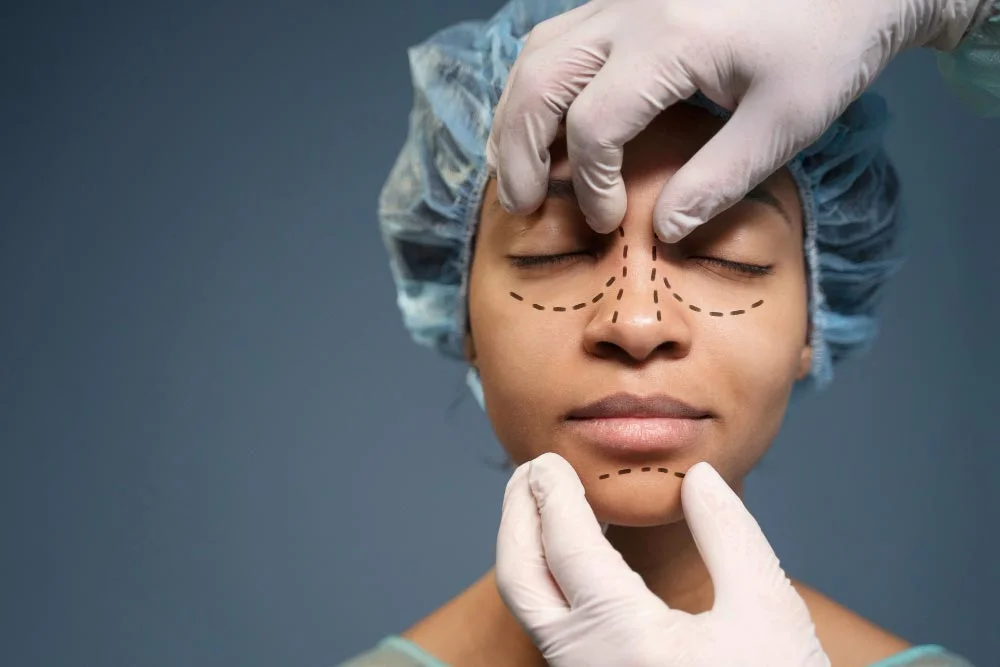
The biggest fear scenario in the minds of many patients considering rhinoplasty is clear: “The breaking of nasal bones, the sounds of hammers and chisels, a face covered in purple bruises after surgery, and a painful recovery process.” However, thanks to advancing medical technologies, these fears are now a thing of the past.
Today, the Piezo (Ultrasonic) Rhinoplasty method, also known as rhinoplasty without breaking and utilizing the power of sound waves, offers a revolutionary level of comfort for both surgeons and patients.
This method, successfully performed in Istanbul by Op. Dr. Bekir Can Gümüşlü, shapes the bones with the precision of a sculptor while protecting the soft tissues.
In traditional rhinoplasty surgeries, mechanical tools (rasps, chisels, hammers) are used to shape the nasal bones (to remove a hump or narrow the nose). While breaking the bone, these tools can sometimes cause uncontrolled fracture lines and damage surrounding tissues (vessels, nerves, muscles). This results in significant bruising and swelling for the patient post-surgery.
The Piezo technique, on the other hand, is a specialized device that operates with ultrasonic sound waves. The most significant feature of this device is that it is “tissue-selective.” This means the device only cuts or shapes the bone, which is hard tissue; however, it stops working the moment it touches soft tissue (vessels, nerves, nasal mucosa). In this way, nasal bones are shaped by being cut with millimetric precision without being broken.
The answer to the concept of “bruise-free rhinoplasty,” which our patients search for most frequently on the internet, is Piezo surgery. Since vessels are not damaged during the surgery, bleeding is minimal. When bleeding is low, the leakage of blood under the skin—and therefore the risk of bruising (ecchymosis) around the eyes—is reduced by 90%.
While patients may be unable to leave the house for 2 weeks due to swelling and bruising in the classical method, in the Piezo method, edema subsides rapidly within 3-4 days, and the patient can easily return to their social life after 1 week.
Since there is no soft tissue damage, post-operative pain and throbbing sensations are much lower.
The Piezo method is ideal particularly for patients who require bone shaping.
Cases where the bone on the nasal bridge needs to be shaved down.
Cases where the nasal base and side walls need to be narrowed.
Noses whose bone structure has been impaired as a result of an accident.
Patients who have undergone surgery before but still have bone irregularities.
If only nasal tip aesthetics (Tipplasty) are to be performed, the Piezo device may not be required since the bones will not be touched. Op. Dr. Bekir Can Gümüşlü will determine the necessity of this technology for you by analyzing your bone structure during your examination.
The piezo device and consumables (tips) used are state-of-the-art products, which may slightly increase the cost of the procedure. However, the comfort, rapid recovery and precise results it provides make this difference negligible.
Yes. Because we shape it millimetre by millimetre, without breaking the bone, the bone transitions are smoother. The risk of bone irregularities or asymmetry is minimised.
Piezo surgery requires more meticulous and detailed work, so the operation time may be approximately 20-30 minutes longer than the conventional method. However, this time is valuable time spent to achieve excellent results.
‘Zero swelling’ is medically impossible because the skin is being treated. However, compared to the traditional method, swelling is significantly reduced and subsides much more quickly (within 3-4 days).
Open rhinoplasty is generally preferred to allow comfortable use of the piezo device tips on the bone. However, the scar under the nose becomes less visible over time and therefore does not cause any aesthetic concerns.